
See what visitors do on your website
UXWizz combines stats, heatmaps, session recordings, goals, events, and error tracking on your own server.Try UXWizz free

Third-party scripts can affect visitor privacy, page speed, and your exposure to supply-chain attacks.
I removed every third-party JavaScript include from my landing page without losing the features I needed.
These are the external services I replaced:
Google Analytics is one of the most common third-party scripts on the web. It sends visitor data to an external analytics provider, which may not fit every site's privacy or data-control requirements.
A privacy-focused analytics platform can reduce the data you share with third parties. Self-hosting also gives you direct control over storage, access, and retention.
See this directory of privacy-friendly analytics platforms for more options.
I use UXWizz because I built it for this job: self-hosted website stats, heatmaps, recordings, goals, and error tracking on a PHP and MySQL server.
Watch the UXWizz segmentation demo (MP4)
I used the chat widget from tawk.to. It worked well, but I had two issues:
Before looking for a replacement I realized that I never used the live chat functionality but only used it as a way for users to send me an email from the landing page. It was just a contact form.
I implemented a simple HTML form and use Web3Forms to handle submissions. It provides the few features I need and is made by an independent developer.
You can check out the form in the bottom right corner of this site.
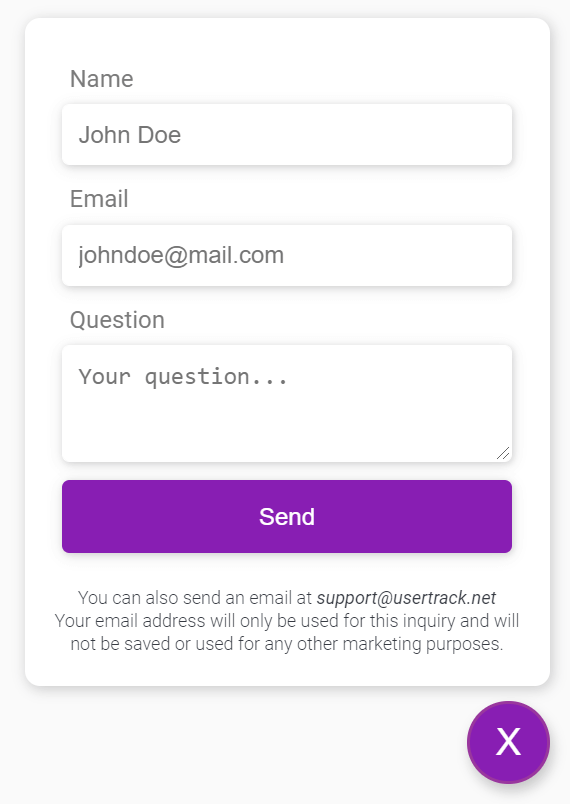
Basic HTML/CSS/JS contact form
Running my own SMTP server would remove that dependency, but it takes more time to configure and maintain correctly, so I postponed it.
Promotional popups can increase sign-ups, but they also interrupt the visitor. Embedded forms from an email service may add more third-party scripts and requests to the page.
One option is to host the required form code yourself. Another is to build a small form that forwards the request to your email service.
I chose a simpler approach: a button that opens the email provider's sign-up form on its own website.

The newsletter sign-up button opens the sign-up form in a new tab
As the newsletter is not a core part of my business (I only send one or two newsletters per year) I have moved the button in the footer of the website.
Google Fonts is a large typography collection. Many sites load fonts such as Roboto, Open Sans, or Inter from Google's servers. That creates an external request whenever a visitor opens the page.
You can download the font files and serve them from your own server.
One open-source tool for this is Google Webfonts Helper.
Once downloaded you can include them like this:
<link rel="preload" href="/css/roboto-v20-latin-regular.woff2" as="font">
<link rel="preload" href="/css/roboto-v20-latin-700.woff2" as="font"> Cristian Buleandră — Founder
Feature description